


08
2025
-
05
Jilin: Promote the Construction of "Good Houses" and Install Renewable Energy Hot Water Systems Such As Air Source Heat Pump in a Reasonable Manner
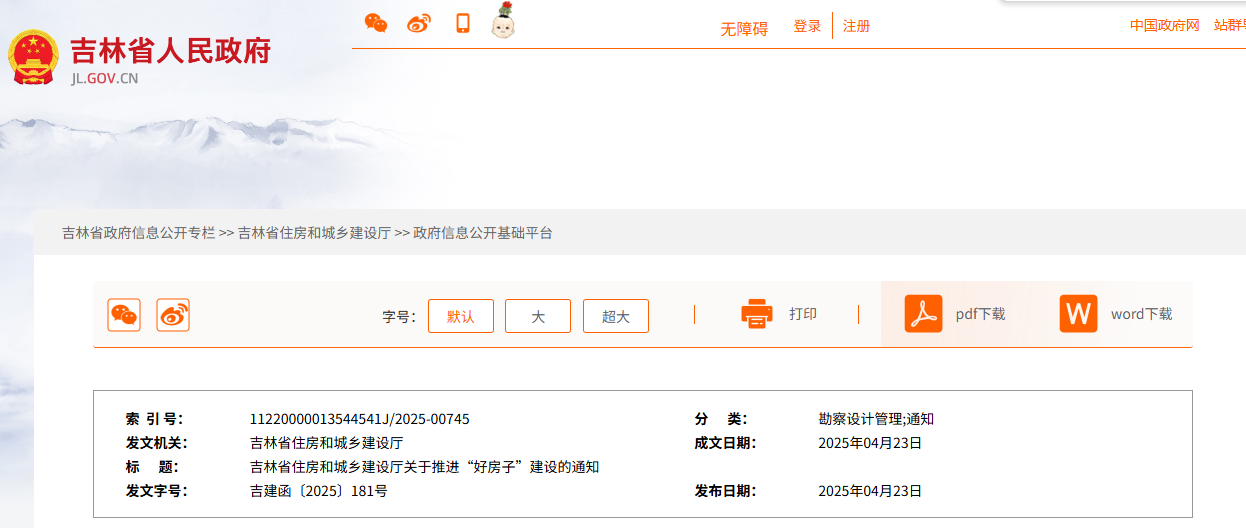
Recently, the Department of Housing and Urban-Rural Development of Jilin Province issued the "Notice of the Department of Housing and Urban-Rural Development of Jilin Province on Promoting the Construction of 'Good Houses'". The notice stated that it is necessary to improve the supporting facilities for the construction of good houses. With centralized heating as the main approach, clean energy heating methods such as gas boilers, electric boilers, and air source heat pumps (MACON's air heat energy products are also applicable in this regard) are used as supplements to provide flexible and diverse heating methods. At the same time, it is essential to promote green construction, popularize green building materials and renewable energy technologies. The proportion of green building materials should not be less than 40%, and renewable energy hot water systems such as solar energy and air heat energy should be reasonably installed.
The original text is as follows:
Notice of the Department of Housing and Urban-Rural Development of Jilin Province on Promoting the Construction of "Good Houses"
To the housing and urban-rural development bureaus, real estate bureaus, urban management bureaus of all cities (prefectures), the housing and urban-rural development bureau of the Changbai Mountain Management Committee, the housing and urban-rural development bureau of Meihekou City, and the housing and urban-rural development bureaus of all counties (cities):
In order to accelerate the construction of safe, comfortable, green, and intelligent "good houses", meet the diverse demand for improved housing, and drive the improvement of urban living quality and comprehensive carrying capacity, the relevant matters are notified as follows.
I. Improve the source supply level
(1) Improve the quality of land supply. Firstly, adopt city-specific policies. Cities with a low inventory scale should comprehensively consider factors such as transportation, education, medical care, industry, and the environment, reasonably increase the supply of high-quality real estate land, enhance the enthusiasm of development and construction entities for land acquisition, and build "good houses". Secondly, cities with a high inventory scale should focus on ongoing projects to build "good houses". Thirdly, strengthen the construction of municipal supporting facilities. The infrastructure such as roads, electricity, gas, water supply and drainage, and greening outside the land use red line should be in place, and the land should be transferred as "clean land". Fourthly, for the idle stock land that is recovered and purchased, adjust the planning conditions reasonably according to the detailed plan, and give priority to using it for the construction of "good houses".
(2) Optimize the planning conditions. Firstly, for the supporting facilities such as community houses, elderly care houses, kindergartens, as well as municipal public facilities such as heat stations and pumping stations that are built in new real estate projects and should be transferred free of charge, the floor area can be excluded from the plot ratio. For the overhead floors at the ground floor of residential buildings near the centralized green space and activity venues in the community, which are used as public passages and residents' activity spaces, the floor area can be excluded from the plot ratio. For non-operating buildings such as open covered corridors, entrances and exits of underground garages, above-ground stairwells and ventilation openings of underground buildings, the floor area can be excluded from the plot ratio. Secondly, for the increased floor area resulting from the use of durable high-quality materials such as bricks, stones, metals, and ceramic panels on the facade or the use of technologies such as wall insulation, it can be excluded from the plot ratio. Thirdly, for closed balconies and bay windows, half of the horizontal projected area of the space enclosed by the outer surface of the enclosure structure can be included in the plot ratio. Fourthly, for residences with a relatively large internal area, a certain proportion of the living room area can be set as a hollow space, and its horizontal projected area can be included in the plot ratio. Fifthly, reasonably determine the matching ratio of commercial housing to parking spaces and the matching ratio of commercial supporting facilities. Sixthly, the facade style and color, such as the architectural form, height, and tone, should reflect regional cultural characteristics and create a beautiful urban landscape. Local areas can formulate relevant policies according to the actual situation, and clarify specific indicators and the upper limit of the proportion.
(3) Innovate the design concept. Firstly, the design should meet the requirements of national standards and specifications such as the "Code for Residential Projects". The floor height of residences should not be less than 3 meters. For residential buildings where the highest entrance floor is the fourth floor or above, or the height from the floor of the highest entrance floor to the outdoor design ground exceeds 9 meters, each residential unit should be equipped with at least one elevator. Secondly, optimize the space layout, create a flexible home space suitable for all ages, appropriately increase the number of bedrooms, reasonably add spaces such as laundry rooms, storage rooms, and fitness and communication spaces, and achieve functional zoning and the separation of moving and static areas. Thirdly, in combination with the climatic characteristics of severe cold regions, advocate large-bay and short-depth house types to improve the lighting and ventilation effects. Fourthly, strengthen the building sound insulation design and improve the level of aging-friendly and barrier-free design. Fifthly, implement the concept of sponge cities and create a water-saving, low-carbon and environmentally friendly living environment.
II. Improve the functional service level
(4) Strengthen public services. Firstly, the 5-minute living circle should have supporting facilities such as community service stations, community canteens, cultural activity stations, outdoor comprehensive fitness venues, kindergartens, and elderly day care centers. The 10-minute living circle should have supporting facilities such as primary schools, shopping malls, supermarkets, restaurants, and medium-sized multi-functional sports venues. The 15-minute living circle should have supporting facilities such as junior high schools, shopping malls, outpatient departments, nursing homes, community health service centers (stations), and large multi-functional sports venues. Secondly, encourage commercial franchise enterprises in the catering, housekeeping, laundry and other industries to settle in, and improve the quality of the life service industry. Grant the franchise right to social forces, provide high-quality and low-cost services, and promote the standardized and branded operation of community services. Thirdly, secondary and tertiary public hospitals should support community health service centers in need of assistance. Fourthly, new projects should have convenient transportation. The walking distance from the entrance and exit of the community to the public transportation station should not exceed 500 meters, and the walking distance to the rail transit station should not exceed 800 meters. Fifthly, for ongoing projects, operation subsidies and service purchase methods can be adopted to revitalize idle and inefficient real estate resources or use community service facilities and transform them into corresponding public service places.
(5) Improve the supporting facilities. Firstly, set up a centralized garbage classification and disposal point for every 300 households, implement the "fixed time and place" disposal method, and set up separate facilities for recyclables and hazardous waste according to the actual situation, and strengthen supervision and registration. Secondly, adopt water supply and gas supply pipes with a service life of not less than 30 years to ensure stable and reliable water pressure for high-rise users. Thirdly, use gas self-closing valves and stainless steel corrugated pipes, and be equipped with gas alarms and network with gas enterprises. Fourthly, install intelligent water meters and gas meters, with functions such as online payment and remote control. Fifthly, with centralized heating as the main method, clean energy heating methods such as gas boilers, electric boilers, and air source heat pumps are used as supplements to provide flexible and diverse heating methods. Install temperature control devices indoors to achieve on-demand heating.
(6) Build smart residential areas. Firstly, integrate technologies such as the Internet of Things, big data, and artificial intelligence, and deeply integrate smart homes and residences. Secondly, promote whole-house intelligence, and encourage development and construction entities to be equipped with security products such as intrusion alarms and automatic fire alarm systems. Thirdly, guide newly built fully decorated residences to install intelligent doors and windows, intelligent lighting, fresh air systems and other equipment to automatically adjust the temperature and humidity. Fourthly, reserve the installation conditions for aging-friendly products such as home abnormal behavior monitoring, emergency call, and health management, monitor the health status in real time, and achieve remote control and alarm feedback.
(7) Provide high-quality services. Firstly, implement professional property management, and clarify the service content and price according to the contract and the five-level service standard. Secondly, regularly inspect and maintain public facilities and equipment such as elevators, secondary water supply, fire protection facilities, face recognition, security monitoring, and external wall insulation. Timely remove domestic waste, keep the public area clean, maintain the landscaping in place, and effectively control key parts such as the entrance and exit of the community. Thirdly, provide 24-hour service, with one housekeeper for each building, and have a sound rapid complaint handling mechanism, with a high owner payment rate and satisfaction rate, and a virtuous cycle of property services. Fourthly, create a "Red Property", carry out joint construction of community property Party building, and the "cross-appointment" of the person in charge of the property enterprise and the members of the community "two committees", and timely establish the owners' committee (property management committee). Fifthly, build a "property + life service" model, provide elderly care services such as meal assistance, bath assistance, travel assistance, medical assistance, and care, as well as personalized services such as infant care, room cleaning, indoor maintenance, express delivery, community group buying, vacant house trusteeship, house rental, and parking space rental and sale. Guide property enterprises to provide intelligent services such as medical treatment, housekeeping services, maintenance, catering, and shopping.
III. Improve the construction quality level
(8) Promote green construction. Firstly, for new projects designed and constructed according to the two-star green building standard, the thermal performance of the enclosure structure should be increased by 10% compared with the current standard value, or the heating and air conditioning load should be reduced by 5%. Secondly, comprehensively adopt thermal insulation materials with a combustion performance level of B1 and A, and encourage the adoption of integrated building insulation structure technology. Thirdly, promote green building materials and renewable energy technologies. The proportion of green building materials should not be less than 40%, and renewable energy hot water systems such as solar energy and air heat energy should be reasonably installed. Fourthly, the indoor air quality of fully decorated houses should meet national standards, and the concentrations of pollutants such as formaldehyde, benzene, and ammonia should not exceed the limits. Fifthly, encourage the adoption of standardized design, factory production, prefabricated construction, and BIM technology. Sixthly, actively promote the "menu-style" decoration mode, encourage the selection of integrated kitchens, bathrooms, ceilings, elevated floors, modular partition walls, pipeline separation and other prefabricated decoration technologies, improve the decoration efficiency, and advocate "scale customization" of hard decoration delivery.
(9) Strengthen quality supervision. Firstly, guide development and construction entities to implement "Party A-supplied materials", control the entry of materials, standardize testing behavior, and implement two-dimensional code identification and witnessed sampling and inspection. Secondly, implement sample leading and promote quality insurance. Standardize the quality control of key sub-projects and key processes, implement sign acceptance during the construction of key links, save video materials, and achieve full-process traceability. Thirdly, eliminate common quality problems such as odor return, leakage, and cracking, and ensure the airtightness, sound insulation, and heat insulation effects of the house. Fourthly, strengthen the safety supervision of the construction site, implement the main responsibility of the enterprise, and improve the essential level of production safety.
(10) Strictly carry out completion acceptance. Firstly, the foundation project and structural project should be under lifelong warranty, and the warranty period for other parts should be more than 50% higher than the national regulations. Secondly, promote "house inspection before house acceptance", carry out "owner open day" activities, and encourage owners to participate in household acceptance. Thirdly, implement a joint acceptance mechanism for land, planning, civil air defense, etc. Fourthly, strengthen the on-site inspection of key links such as fire safety evacuation, fire protection facilities, and fire rescue sites to ensure that the supporting facilities are complete and the service functions are perfect when the house is delivered.
Department of Housing and Urban-Rural Development of Jilin Province
April 23, 2025
Get a Free Quote
We welcome you for any inquiries,tell us about your project to receive a no-obligation price quote

Hotline
Address
Building 4,No.7,Xinhui Road,Wusha Community,Daliang Town,Shunde District,Foshan City,Guangdong Province,China
Follow Us